

Why you should not laser PVC
What makes PVC dangerous?
Section titled “What makes PVC dangerous?”PVC contains chloride, which is a negatively charged ion (anion). When heated by the laser, chloride becomes a toxic gas that actively seeks positive particles to reach a balanced state. This chemical reaction causes severe damage to both your machine and your health.
Other hazardous anions to avoid
Section titled “Other hazardous anions to avoid”PVC is not the only dangerous material. Avoid processing any materials containing these anions:
- Fluoride (F-) - Found in fluoropolymers and some plastics
- Bromide (Br-) - Found in flame retardants and some vinyl compounds
- Iodide (I-) - Found in certain chemical compounds
- Chloride (Cl-) - Found in PVC, vinyl, and chlorinated plastics
How the damage happens
Section titled “How the damage happens”When you laser PVC or chloride-containing materials, the released gas doesn’t just disappear: it actively attacks everything it touches.
What happens to your machine
Section titled “What happens to your machine”The chloride gas pulls positive particles from metal components to balance itself. This process:
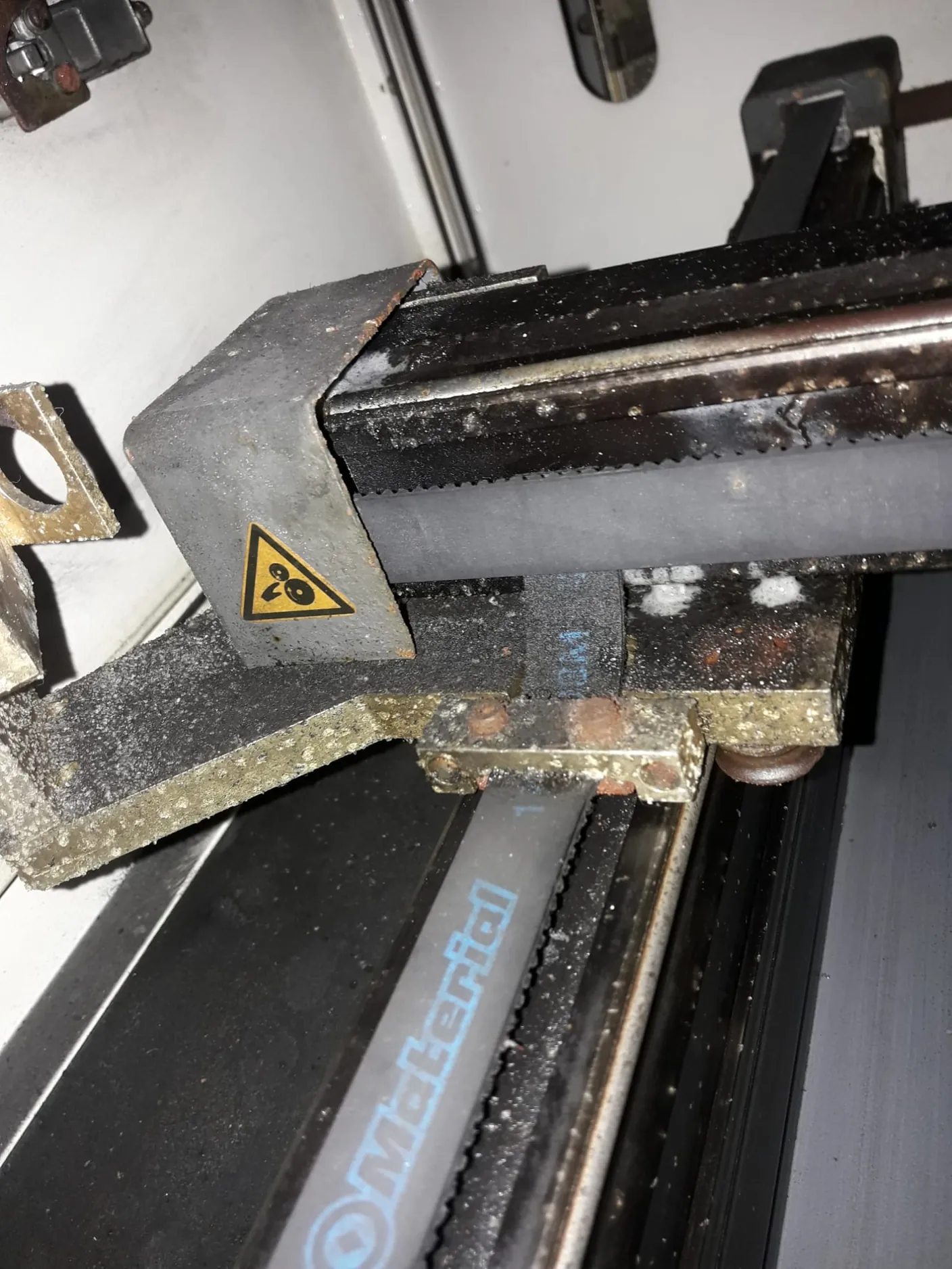
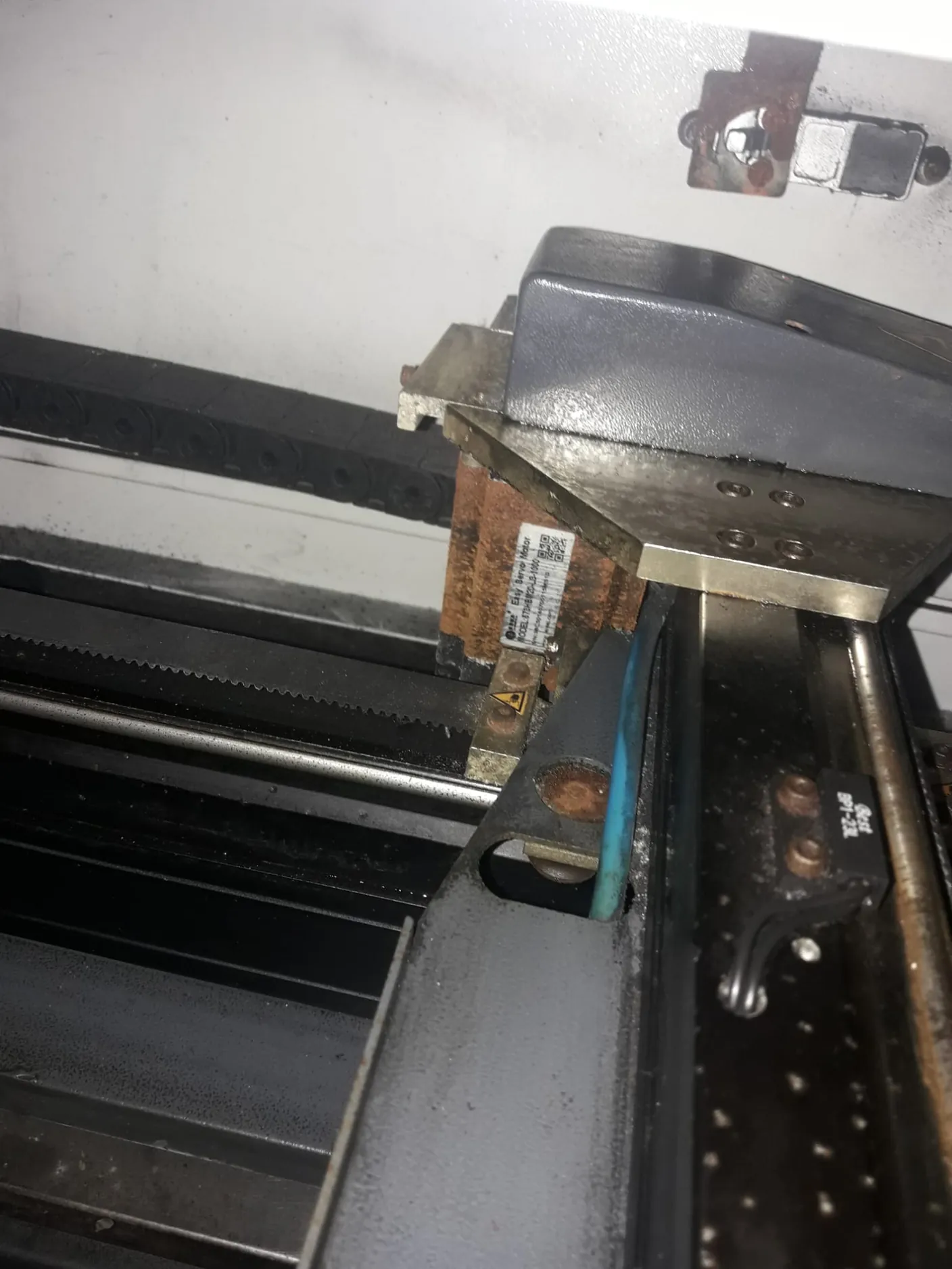
- Corrodes steel parts - Components appear rusty and turn orange
- Damages moving parts - Motors, bearings, and guide wheels deteriorate
- Creates mechanical play - The laser head and axes become loose and inaccurate
- Destroys precision - Your machine loses accuracy and eventually stops working
The images below show typical damage from chloride exposure:
What happens to your health
Section titled “What happens to your health”Chloride gas is toxic to humans. Even with extraction systems, you cannot safely remove these gases. The health effects are severe and include:
- Immediate effects: Eye irritation, burning sensation, respiratory discomfort
- Short-term exposure: Lung damage, skin irritation
- Long-term exposure: Potential blindness, permanent lung damage, increased cancer risk
What if I accidentally lasered PVC?
Section titled “What if I accidentally lasered PVC?”Unfortunately, accidental exposure causes permanent damage. The corrosion process continues until all anions reach chemical balance, which can take months after the initial exposure.
Why the damage continues
Section titled “Why the damage continues”Unlike rust (which is self-sustaining), anions stop causing damage once they reach balance. However, you cannot predict when this will happen. The gas particles settle throughout your machine and continue corroding new surfaces they contact.
Can I repair the damage?
Section titled “Can I repair the damage?”Replacing individual parts is difficult because:
- Chloride particles accumulate throughout the machine
- New parts immediately contact contaminated surfaces
- The corrosion process transfers to replacement parts
- It’s impossible to know when all anions have balanced
If you must attempt repairs, follow this decontamination process carefully.
Emergency decontamination procedure
Section titled “Emergency decontamination procedure”Step-by-step cleaning
Section titled “Step-by-step cleaning”-
Wipe down all surfaces with damp cloths
- Remove every trace of dust and residue
- Pay special attention to corners, crevices, and hidden areas
- The machine must be completely dust-free
-
Do NOT use vacuum cleaners or compressed air
- Vacuums lack appropriate filters and will spread anions throughout your workspace
- Compressed air simply displaces the problem
- The vacuum cleaner itself will become contaminated and fail
-
Dispose of cleaning materials properly
- Treat all cloths as chemical waste
- Follow local hazardous waste disposal regulations
-
Wait and observe
- After cleaning, wait several weeks before replacing parts
- Monitor whether new corrosion appears
- If corrosion stops, the anions may have reached balance
Material verification
Section titled “Material verification”Not sure if your material is safe? Submit a ticket with the material’s MSDS attached. Our team will help you determine if it’s safe to process.
Related articles
Section titled “Related articles”- Which materials can you laser - The never / caution / safe list, and how to identify an unknown sheet